What DPH is doing
The Los Angeles County Department of Public Health is working with other agencies, stakeholders, and communities to protect people in Los Angeles County, especially low-income populations and communities of color, from extreme heat and other negative impacts of climate change.
We address extreme heat by promoting upstream solutions that cool the most impacted neighborhoods as well as by taking action during heat waves to protect lives.
Cooling neighborhoods—known as urban heat island reduction—is an important strategy for combatting extreme heat. The term Urban Heat Island (PDF) refers to areas that are artificially hotter due to surfaces that absorb heat (like roofs and pavements) and a lack of vegetation, particularly trees. The urban heat island effect causes people in cities to suffer from higher temperatures simply because of where they live. Low-income communities and many communities of color across Los Angeles County are most impacted by the urban heat island effect.

Figure 2. Lawrence Berkeley National Laboratory, Heat Island Group
To fix this, we are working with our fellow County departments to promote urban heat island reduction strategies: Cool roofs, green space, trees, and cool pavements:

Urban heat island reduction is just one activity in the DPH Five Point Plan to Reduce the Health Impacts of Climate Change:
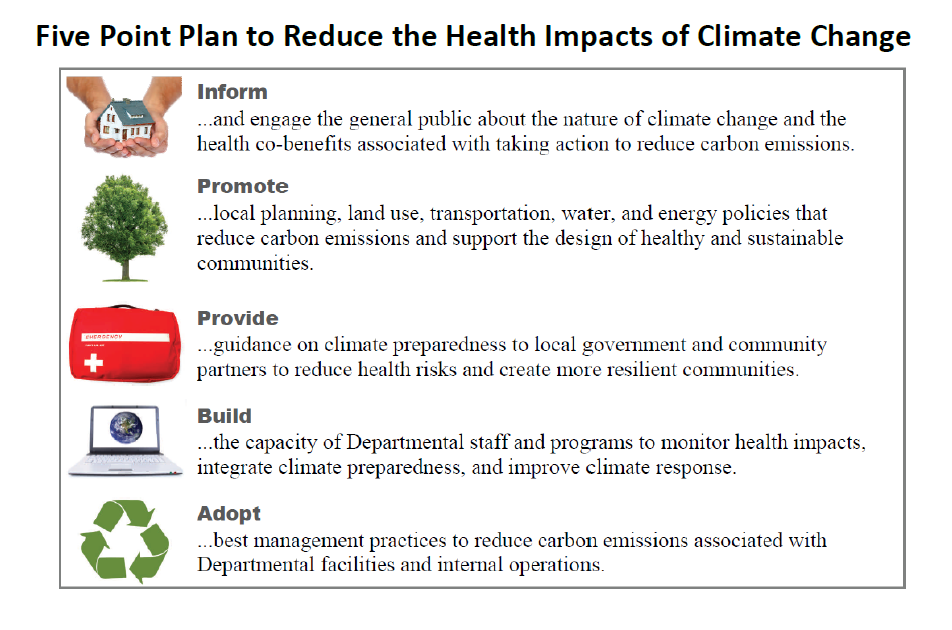
The plan focuses on reducing greenhouse gas emissions and protecting people from the negative health impacts of climate change. Download our 5-Point Plan (PDF) for reference.