Lead
Lead is a metal found in the earth that has been used by people for centuries. Lead has been used in many products such as paints, gasoline, plumbing structures, crystal, ceramic glazes, and batteries. Lead is also a poison that is dangerous to you and your family. It can harm a child's brain and nervous system, which can cause learning and behavioral problems. Pregnant women and women of child-bearing age are also at increased risk. Babies and young children are at the highest risk because they play on the floor and often put their hands and toys in their mouths. It takes only a very small amount of lead to poison someone.
Even at relatively low levels of exposure, more recent research has demonstrated a link between a variety of subtle cognitive problems, including learning disabilities, and decreased intelligence.
Children are more sensitive to the harmful effects of lead than adults, because more of the lead they swallow gets into their bloodstream. Children also are at greater risk because they often play on the floor or ground, where lead-contaminated dust or soil is found. And they are much more likely than adults to put this material in their mouths.
Considerable efforts have been made to reduce children's exposure: Lead-based house paints have been banned since 1978, toy makers can no longer use lead-containing paints and the use of lead additives in gasoline has decreased.
In spite of these measures, it's estimated that nearly 250,000 American children under the age of 5 have abnormally high levels of lead in their blood.
What We Do
The Environmental Health Division performs three important roles in addressing lead issues:
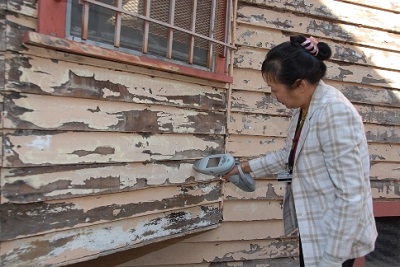
- Conducting environmental investigations at the homes of lead poisoned children to identify potential environmental lead hazards that may have caused or contributed to the child's lead poisoning
- Educating owners, contractors, government agencies, and the public about lead hazards and steps to prevent lead poisoning from occurring
- Responding to complaints of unsafe lead work (such as sandblasting without any containment) at properties built before 1978 that may contain lead paint
Environmental Health works jointly with Public Health nurses and other professionals as part of a Childhood Lead Poisoning Prevention Program (CLPPP) team. To learn more about the program, please visit the Childhood Lead Poisoning Prevention Program page.
Areas We Serve
The Environmental Health Division conducts investigations, educates residents, and responds to complaints across all of Los Angeles County, except for the cities of Long Beach, Pasadena, or Vernon, since they have their own environmental health departments.
Frequently Asked Questions
-
What is Lead Poisoning?
Lead poisoning occurs when lead accumulates in the body, either by gradual accumulation from repeated exposure or by exposure to a large source. Lead travels through the bloodstream and can damage any organs receiving blood. Lead can also be absorbed in the bones, where it can stay for 30 years or more. When the body is under stress or is malnourished, some of the lead can leave the bone and enter the bloodstream where it can begin to cause damage again.
Lead poisoning can only be determined by a blood test. Results are measured in micrograms per deciliter (mcg/dL). The ideal blood lead level would be zero for any individual, but the national average is about 2mcg/dL. Levels at or above 3.5 mcg/dL are a concern.
-
How does Lead Poisoning Occur?
Lead is absorbed by the body primarily through the lungs and stomach. Eating objects that contain lead (paint chips, soil, some imported candies or home remedies), or breathing lead dust are common ways to get poisoned. Small children frequently put objects or their hands in their mouth and therefore are at higher risk for becoming poisoned if these objects contain lead or are contaminated with lead dust.
-
What are the symptoms of lead poisoning?
Unfortunately, the symptoms for lead poisoning are very difficult to spot, especially at very low levels. At low levels, there may be no observable symptoms. The only way to know for sure if you or your child have lead poisoning is through testing. Even low levels of lead in the blood can cause permanent harm. At higher levels, the following may be observed:
Adults Children - Fatigue
- Depression
- Heart Failure
- Abdominal Pain
- Gout
- Kidney Failure
- High Blood Pressure
- Wrist or Foot Weakness
- Reproductive Problems
- Anemia
- Decreased Appetite
- Stomach Ache
- Sleeplessness
- Learning Problems
- Constipation
- Vomiting
- Diarrhea
- Anemia
-
How Can Lead Poisoning be Treated?
At elevated blood lead levels, chemical treatment can help remove the lead from a person's blood. At lower levels, removing the sources of lead exposure and ensuring proper nutrition will allow the body to gradually expel the lead. Lead in blood is either absorbed by soft tissue and bones or is eliminated through feces and urine. Foods rich in calcium, iron and vitamin C can help reduce the amount of lead the body absorbs.
-
Who is At Risk for Lead Poisoning?
Lead is most harmful to children under age six because it is easily absorbed into their growing bodies and interferes with the developing brain and other organs and systems. Pregnant women and women of child-bearing age are also at increased risk, because lead ingested by the mother can cross the placenta and affect the unborn fetus.
-
What is Being Done to Protect the Public from Lead Poisoning?
Many laws have been passed to reduce the public's exposure to lead. Most focus on reducing or eliminating lead from consumer products (paint, candy, toys, jewelry, cosmetics, food, drugs, furniture, dishware, etc.), especially those designed for children. Additional laws are in place to prevent lead that exists in our homes from becoming a hazard.
In Los Angeles County, Environmental Health is working to educate property owners, businesses, community groups, other governmental agencies, and the public about the dangers of lead.
-
What Can I Do to Protect Myself or My Family?
- Have your child tested for lead
-
In homes built before 1978:
- Make sure that painted surfaces are kept in good condition. Don't let paint start to peel or deteriorate
- Clean hard floors with a wet mop
- Wipe window sills, counters and other horizontal surfaces with a wet cloth - don't stir up dust
- Use a HEPA (High Efficiency Particulate Air) vacuum to clean carpets. Other vacuums will spread any lead dust around the house
- Cover bare soil areas with grass, concrete, or bark
- Make sure that any repairs that disturb painted surfaces are done using safe work practices (dust-free and contained)
- Run the faucet for at least 30 seconds before using the tap water whenever the water may have been standing for a long period
- Use cold water for drinking, cooking and making infant formula because it carries less lead. (Boiling the water concentrates the lead)
- Check pottery, china and leaded glassware for lead content
-
How Do I Get My Children Tested for Lead?
Contact your medical provider to request a blood test specifically for lead levels. For more information on blood lead testing, please visit the Childhood Lead Poisoning Prevention Program website.
-
What should I do if I suspect that there is lead in my home?
Many older homes, especially those built prior to 1978, still contain paint with high lead levels. The older the home, the more likely it is to have lead. Keep painted surfaces in good repair. Lead-based paint that is peeling or chipping is especially dangerous because young children may eat it. Do not dry sand or scrape painted surfaces by yourself as this creates hazardous lead dust and can actually increase your risk of toxic exposure.
If you believe lead paint may be a problem, have your home inspected by a qualified inspector.
-
Can I Remove Lead Paint from My Home by Myself?
If you own or perform repairs at a property built before 1978, you are required to:
- Test painted surfaces for lead-based paint prior to beginning the work, or assume the surfaces contain lead-based paint and use lead-safe work practices
- Do not use belt-sander, propane torch, high temperature heat gun, dry scraper, or dry sandpaper to remove lead-based paint
- Maintain painted surfaces in good repair
- Check impact or friction surfaces (windows and doors) for dust or deterioration
- Landlord are required to disclose known information on lead-based paint and lead-based paint hazards before leases take effect
- Sellers must disclose known information on lead-based paint and lead-based paint hazards before selling a house
If lead-based paint is discovered in your home, the best solution is to hire a certified abatement company who are experienced in working with hazardous materials and special equipment to remove it. Lead paint removal should be done only by trained, certified professionals. If you're unable to afford professional abatement or it's impractical, a good alternative is to cover the painted surface with durable, tough material like drywall or paneling. Simply painting or wallpapering over lead paint usually doesn't provide sufficient.
Federal and State laws require contractors who disturb lead-based paint in homes built before 1978 to be certified and follow specific work practices to prevent lead contamination. For a list of construction professionals in the Los Angeles area certified by the California Department of Public Health (CDPH) to perform lead-related work, contact the CDPH Childhood Lead Poisoning Prevention Branch, or visit their website. Also refer to the EPA's publication regarding Renovate Right- Important Lead Hazard Information for Families, Child Care Providers and Schools or visit their website You can also call 1-800-424-LEAD (5323) for information about courses and resources on lead-safe work practices.
Information and Pamphlets
General Lead Information
- Protect Your Child from Lead
- Warning Lead in Candy
- Lead in Pottery : English ⋅ Español
- Home Remedies May Contain Lead : English ⋅ Español
- Traditional and Home Remedies Known to Contain Lead
- Don't Take Lead Home : English ⋅ Español
- Tips for Lead-Safe Toys
Lead in Your Home
- The Lead-Safe Certified Guide to Renovate Right : English ⋅ Español
- Caution: Lead Paint Handle With Care
- Guide to a Healthy and Lead Safe Home for Children
- Remodeling or Repainting - Protect Your Family : English ⋅ Español
- Homeowner's Guide to Lead-Safe Painting and Home Improvement
- Make your Home Lead-Safe for your Child
Report a Problem
If you see unsafe lead work, such as dust created by dry scraping or sanding paint on housing built before 1978, you may contact the Los Angeles County Childhood Lead Poisoning Prevention Program at 1-(800)-LA-4-LEAD or file a complaint.
If you live in a rental property or apartment complex built before 1978 and have chipping or peeling paint that is not being repaired by the property owner/property management, contact the Environmental Health Call Center at (888) 700-9995 or File a Complaint Online.